A right-of-way permit is rarely just a form submitted to one transportation department. DOT permit services often involve identifying who controls the affected space, confirming which approvals apply, and coordinating requirements that can influence the work schedule.
If you’re unsure whether a project needs a permit, or concerned that a missing document or coordination step could delay work, that uncertainty is understandable. Requirements differ by jurisdiction, and activities affecting streets, sidewalks, utilities, traffic flow, or public access may need review by different authorities.
This guide explains what DOT permits generally cover, which project activities may trigger a right-of-way permit, and how to identify the responsible authority. It also outlines typical application and coordination steps, including traffic-control plans, utility information, and public-access considerations. You’ll learn what to check before submitting and when a permit expediter may help organize documents, manage agency communication, and track application status. The goal is a clearer process, with jurisdiction-specific requirements confirmed before work begins.
Key Takeaways
- Assess the work by activity, including staging, temporary access, right-of-way occupation, and effects on traffic movement.
- Confirm which authority controls the affected property before relying on a permit name, form, or checklist.
- Use DOT permit services to help coordinate application documents, submissions, agency communication, and status follow-up.
- Reduce avoidable review issues by aligning drawings, work limits, and agency comments before and during submission.
- Consider application management when a project involves multiple parties or coordination needs, while confirming requirements with the responsible authority.
What DOT Permit Services Cover in Public Right-of-Way Projects
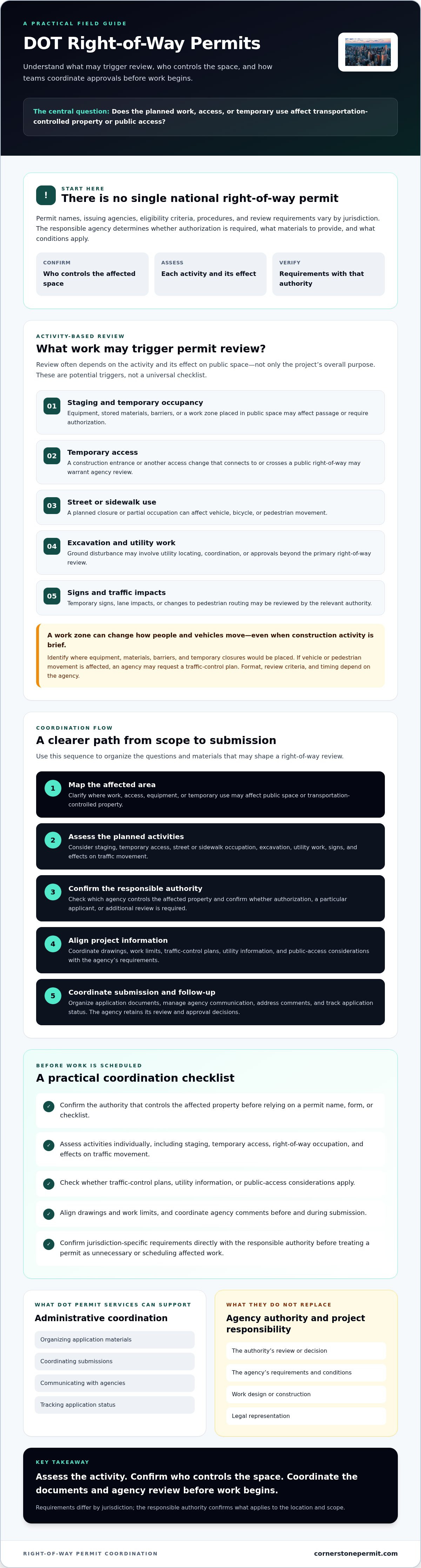
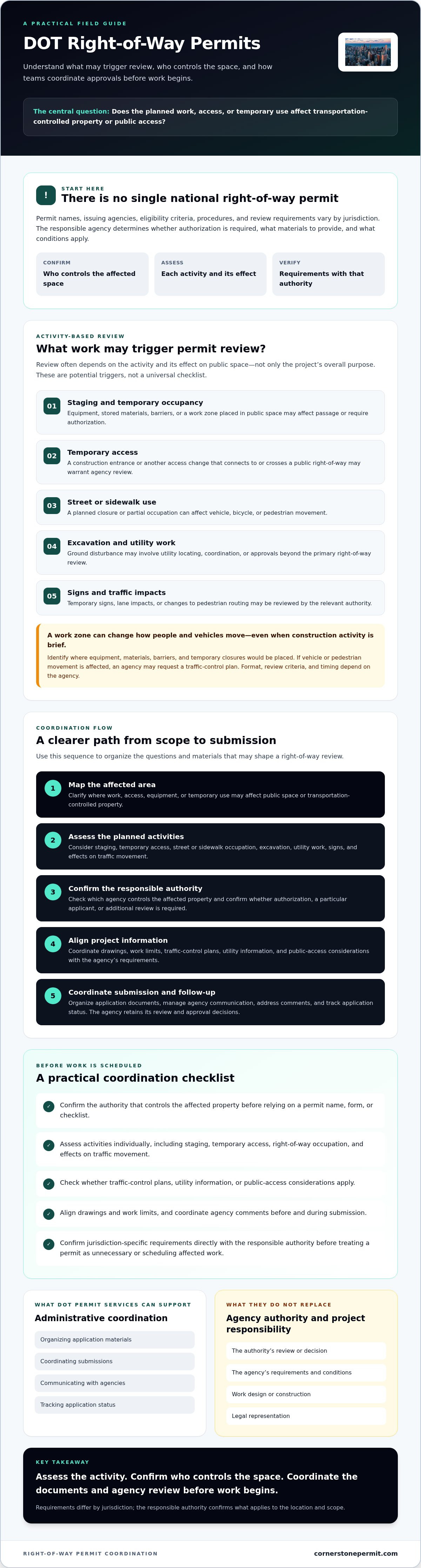
DOT permit services provide administrative support for identifying, preparing, and coordinating approvals that may be required for work affecting transportation-controlled property or public access. They help project teams manage permit documents and agency communication, but they don’t replace the authority’s review or decision. There is no single national right-of-way permit. Permit names, issuing agencies, eligibility criteria, and procedures vary by jurisdiction.
A public right-of-way generally refers to space reserved for public passage or transportation use. For a commercial construction project, the practical question is whether planned work, access, or temporary use affects property managed by a transportation authority or another public agency. The location and scope of the work help determine which authority to contact.
What does a transportation or right-of-way permit authorize?
A permit may authorize a defined activity in or affecting public right-of-way, subject to conditions set by the responsible agency. Potential triggers include temporary construction staging, access from a public street, occupying part of a sidewalk or roadway, or work that could affect traffic movement. These examples aren’t a universal checklist. An activity that needs approval in one jurisdiction may follow a different process elsewhere.
The agency with jurisdiction determines whether authorization is required, what application materials to provide, and what conditions apply. Conditions may address the approved work area, timing, public access, or traffic impacts. Confirm requirements directly with the responsible authority before treating a permit as unnecessary or scheduling work in an affected area.
Which project teams use DOT permit services?
Contractors, developers, builders, and project managers may need to coordinate right-of-way approvals for commercial construction. Property owners and utility stakeholders may also need to clarify permit responsibilities when planned work, access, or equipment could affect transportation-controlled space. The applicant or responsible party depends on the project and the authority’s requirements, so confirm this early.
Early scoping helps the team identify the affected area, the authority to consult, and who will assemble or provide project information. It also gives project managers a chance to flag dependencies before field work is scheduled, rather than discovering that a separate approval or review may be needed after mobilization plans are set.
A permit expediter’s role is administrative coordination, not designing the work, performing construction, or providing legal representation. Depending on the agreed scope, an expediter may organize application materials, coordinate submissions, communicate with agencies, or track status. The agency retains control of its requirements and approval decisions.
Which Project Activities May Trigger DOT Permit Review?
Permit review often depends on the activity and its effect on public space, not simply on the project’s overall purpose. A commercial construction site may need to assess each planned use of the street, sidewalk, or adjacent transportation area. These are potential triggers, not a universal permit checklist. The agency responsible for the location and scope must confirm what applies.
- Staging and temporary occupancy: Equipment, stored materials, barriers, or a work zone placed in public space may affect passage or require authorization.
- Temporary access: A construction entrance or other access change that connects to or crosses a public right-of-way may warrant agency review.
- Street or sidewalk use: A planned closure or partial occupation can affect vehicle, bicycle, or pedestrian movement.
- Excavation and utility work: Ground disturbance may involve utility locating, coordination, or approvals beyond the primary right-of-way review.
- Signs and traffic impacts: Temporary signs, lane impacts, or changes to pedestrian routing may be reviewed by the relevant authority.
Work zones, temporary occupancy, and traffic impacts
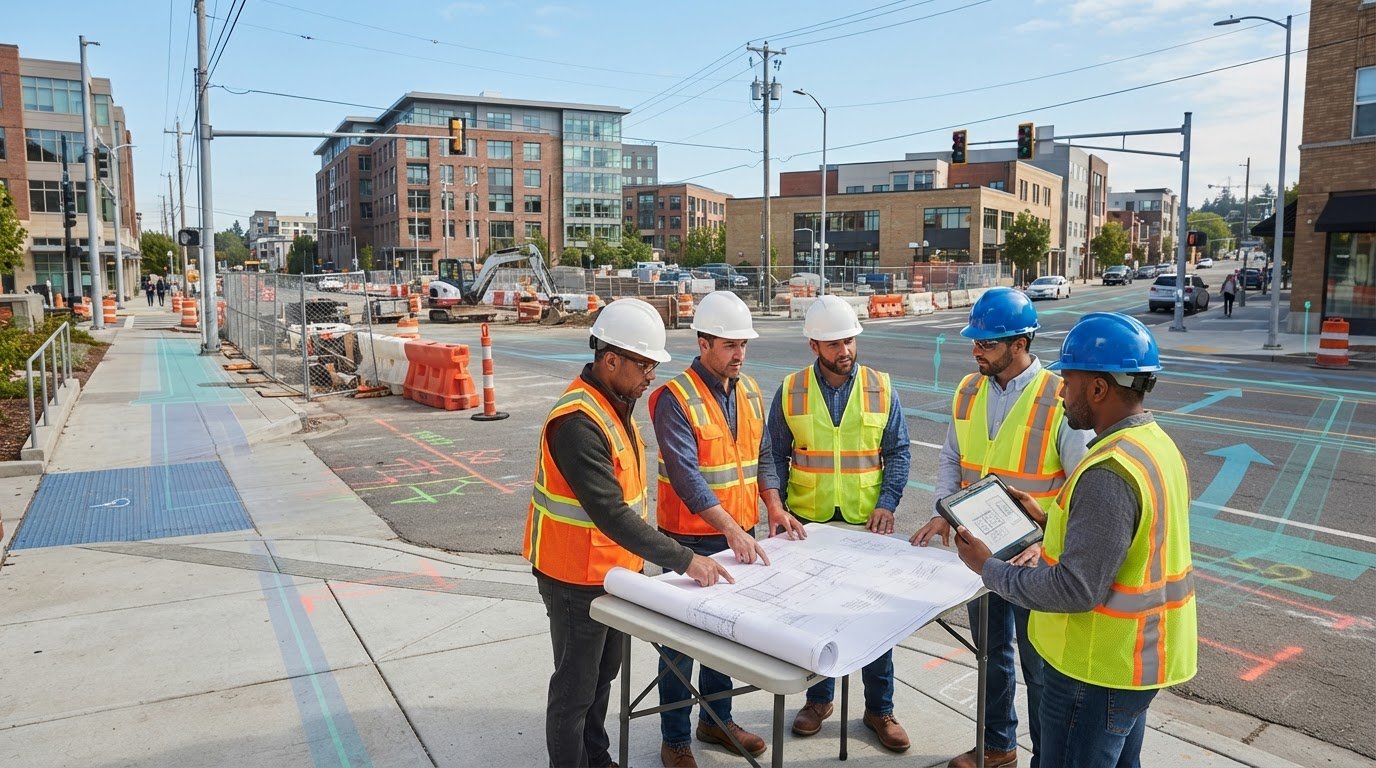
A work zone can change how people and vehicles move through an area, even if the construction activity is brief. Before mobilization, identify where equipment, materials, barriers, and temporary closures would be placed. Then assess whether they could obstruct public passage or alter traffic flow. If work affects vehicle or pedestrian movement, an agency may request a traffic control plan. The format, review criteria, and submission timing depend on the agency, so confirm its expectations instead of relying on a plan from another project.
Excavation, utilities, signage, and access
Subsurface work adds a coordination step: identify potential utility conflicts and determine which notifications or approvals are required before digging. In the United States, 811 is a utility-locate resource, but project teams should verify the notification process, timing, and requirements for the specific location. A locate request does not, by itself, establish that all agency permits or project coordination are complete.
Temporary signs and access changes also need consideration. A sign intended to direct vehicles or pedestrians, for example, may be subject to requirements separate from authorization to occupy a sidewalk or roadway. Confirm which agencies have jurisdiction and whether separate reviews are needed. Clear activity descriptions and work limits help the authority assess the request.
For teams coordinating several activities or stakeholders, DOT permit services may provide administrative support with the application process. Confirm the responsible agency’s requirements for each activity before finalizing field schedules.
How the DOT Permit Application and Coordination Process Works
A right-of-way application moves through practical steps, but the exact process depends on the authority, location, and proposed work. DOT permit services can support administrative coordination, while the responsible agency sets its forms, submission channel, review stages, fees, and approval conditions. Use the sequence below as a planning framework, then confirm current requirements directly with the agency.
- Identify the authority. Determine who controls the affected right-of-way and which agency should receive the request.
- Define the scope. Document work limits, proposed dates, access needs, staging areas, and expected traffic or pedestrian impacts.
- Confirm submittals. Ask the agency for current forms, supporting materials, fees, and review steps.
- Submit and track. Retain submission records and monitor the application for comments or requests for additional information.
- Respond and close out. Assign comments to the right project team members, provide revisions, and verify any closeout requirements.
Confirm the authority, scope, and submittal requirements
Start by identifying the property or right-of-way affected by the work and confirming which agency has jurisdiction. Describe the proposed activity in terms a reviewer can assess, including limits, dates, access, staging, and anticipated impacts. Ask the agency what it currently requires. Depending on the project, requested materials may include drawings, schedules, insurance documentation, or traffic plans. Don’t assume a package used for a previous project will apply.
Complete, coordinated submissions can reduce avoidable administrative back-and-forth. Before filing, check that the application and supporting documents use consistent work limits and project details. Confirm who on the team will answer follow-up questions.
Submit, respond to comments, and close out
After submission, maintain a record of the receipt, application version, agency comments, revisions, decisions, and assigned responsibilities. A shared tracking log helps the project team see what remains outstanding and who must respond. Address each comment clearly and provide complete revisions through the channel specified by the agency. Prompt coordination supports the review process, but it doesn’t determine the agency’s decision or establish a processing date.
Approval may come with conditions the team needs to communicate to field personnel before work proceeds. At project completion, the agency may also require closeout records, inspection coordination, or confirmation that affected areas were restored. Requirements vary, so verify them with the authority and retain the records it requests.
Common DOT Permit Delays and How Project Teams Can Reduce Them
Administrative rework often starts with preventable gaps: missing attachments, inconsistent drawings, unclear work limits, or agency comments that no one is assigned to answer. Review durations vary according to the authority, project scope, completeness of documentation, and coordination required. A permit expediter can organize submissions and follow-up, but can’t override agency review or promise a decision date.
Permit conditions can also affect field execution. Requirements related to access, work areas, traffic movement, or public communication may influence mobilization, construction sequencing, and how the team informs affected users. Build those conditions into project planning rather than treating approval as the only milestone.
Documentation and scope gaps that create rework
Before submitting, compare the application description with the drawings, work schedule, and any traffic-control information. Check that site boundaries and work limits are clear, dates align across documents, and requested attachments are included. A mismatch, such as a drawing showing a broader work area than the application describes, can prompt clarification or revisions.
Maintain one current record of the submitted package and agency correspondence. A controlled file set helps the team distinguish the latest revision from superseded materials and respond using the correct version. Assign someone to review completeness before filing and to log later comments, responses, and changes.
Coordination risks across agencies and project teams
Map responsibilities before review begins. Identify who owns the application, who provides project drawings and schedules, who coordinates with utility contacts, and who responds to each reviewing authority. If separate permits or agency reviews are related, determine their sequence and dependencies. One approval or agency comment, for example, may affect the work limits or supporting information needed for another submission.
Keep roles clear. A permit coordinator may help manage documents, track status, route comments, and follow up with agencies. Technical decisions about construction methods, engineering, or traffic-control design belong with the qualified professionals responsible for those disciplines. Clear ownership reduces delays caused by unanswered comments without confusing administrative coordination with technical judgment.
For information about application and agency follow-up support, see Cornerstone’s DOT permit coordination services. Requirements and review decisions remain with the responsible authority.
When DOT Permit Services Can Support Your Project
Application management can be useful when right-of-way approvals involve multiple project parties, separate agency reviews, or documents that must stay aligned with a construction schedule. It may also help when a project team needs a clear record of submissions, open comments, and follow-up responsibilities. DOT permit services provide administrative support, but the value depends on a defined scope and clear ownership between the provider and project team.
Before engaging an expediter, establish what coordination will cover and what remains with your team. Ask who will organize application documents, submit materials, track status, communicate with agencies, and route review comments. Confirm who prepares technical plans, responds to design-related comments, and holds applicant responsibilities. Agree on communication cadence, documentation ownership, and any exclusions before work begins.
What to confirm before engaging a permit expediter
Request a clear description of deliverables and roles. For example, clarify whether the provider will track agency correspondence and flag outstanding requests while your project professionals remain responsible for technical decisions and revisions. Confirm how updates will be shared and where current application records will be maintained. A well-defined scope helps prevent missed handoffs and keeps administrative coordination distinct from design, construction, and legal responsibilities.
The permitting authority retains control over its requirements, review process, conditions, and approval decision. An expediter can help manage the application process, but cannot guarantee acceptance or determine how quickly an agency will act. Continue to verify requirements with the authority responsible for the affected right-of-way.
How Cornerstone supports permit coordination
Cornerstone Permit Company provides permit application and regulatory consulting support, including DOT permits, for contractors, developers, and builders nationally. Its services can help teams coordinate permit documents and application processes. Confirm the specific tasks for the project before engagement. This is administrative process support, not a substitute for technical plan preparation or the agency’s own review.
Projects that also involve signage may benefit from reviewing Sign Permit Expediting: A Commercial Project Guide for 2026 for related coordination considerations. You can also discuss your DOT permit needs with Cornerstone and clarify the project scope and support required.
Set Your Right-of-Way Permit Process in Motion
Successful right-of-way coordination starts with confirming which authority controls the affected area and what that agency requires for the specific work. Activities such as staging, temporary access, excavation, or changes affecting public passage may prompt review, but requirements vary by jurisdiction. Clear work limits, coordinated documents, and assigned responsibility for agency comments can help reduce avoidable application rework.
DOT permit services can support the administrative process through application and regulatory consulting, while the responsible authority retains control of its requirements, review, conditions, and approval decisions. For complex or multi-party projects, define who will manage documents, submissions, follow-up, and technical responses before work begins.
Founded in 2014, Cornerstone Permit Company is a Certified Minority Business Enterprise (MBE) offering permit application and regulatory consulting services. If you’re planning work that may affect public right-of-way, discuss your DOT permit requirements with Cornerstone and clarify the coordination support your project may need. With responsibilities established early and agency requirements confirmed, your team can plan the next steps with greater clarity.
Frequently Asked Questions
What are DOT permit services?
DOT permit services provide administrative support for managing applications and coordination related to work affecting transportation-controlled property or public access. Depending on the agreed scope, support may include organizing application materials, submitting documents, tracking status, and coordinating agency communication. Permit names and procedures vary by jurisdiction, so confirm requirements with the authority responsible for the location. These services don’t replace agency review or provide design, construction, or legal representation.
When does a construction project need a DOT permit?
A project may need a DOT or right-of-way permit when planned work or temporary use affects a public street, sidewalk, or other transportation-controlled space. Potential triggers include construction staging, temporary access, excavation, sidewalk or roadway occupation, signage, or impacts to traffic movement. These examples aren’t universal requirements. The responsible agency determines whether authorization is needed and what conditions apply, based on the project’s location and scope.
Who issues permits for work in a public right-of-way?
The agency with jurisdiction over the affected right-of-way determines which authorization applies and issues or administers the relevant permit. Depending on the location and work, that authority may be a transportation department or another public agency. A project can involve more than one reviewing authority, particularly if separate areas or activities are affected. Confirm jurisdiction before applying, and ask each responsible agency about its current process and requirements.
What documents may be needed for a DOT permit application?
Required documents vary by agency and project. An application may call for a description of the work, drawings showing limits and access, a schedule, insurance documentation, or traffic-control information. The authority may request other supporting materials or revisions during review. Before submitting, compare dates, work areas, and project details across the application and attachments, then confirm the current submittal checklist and submission method directly with the responsible agency.
How long does it take to get a DOT permit?
There is no single processing time that applies to all DOT permits. Review duration depends on the authority, project scope, completeness of the documentation, agency workload, and any required coordination or revisions. Ask the responsible agency whether it provides current review guidance, and plan for possible comments or additional submittals. An expediter can track status and coordinate follow-up, but cannot guarantee an approval date or change the agency’s review schedule.
Can a permit expediter guarantee DOT permit approval?
No. A permit expediter can help manage application documentation, submissions, status tracking, agency communication, and comment coordination, according to the agreed scope. The authority retains control over its requirements, review, conditions, and approval decision. Project teams should also confirm who is responsible for technical plans and responses requiring professional judgment. Clear coordination can help manage the process, but it cannot ensure that an agency will approve an application.
What is the difference between a DOT permit and a traffic control plan?
A DOT permit is an agency authorization for specified work, access, or temporary use affecting transportation-controlled property or public access. A traffic control plan is a document that may explain how vehicle or pedestrian movement will be managed during work. An agency may request such a plan as part of its permit review when traffic could be affected. Requirements and plan formats vary, so confirm what applies to the project with the authority.