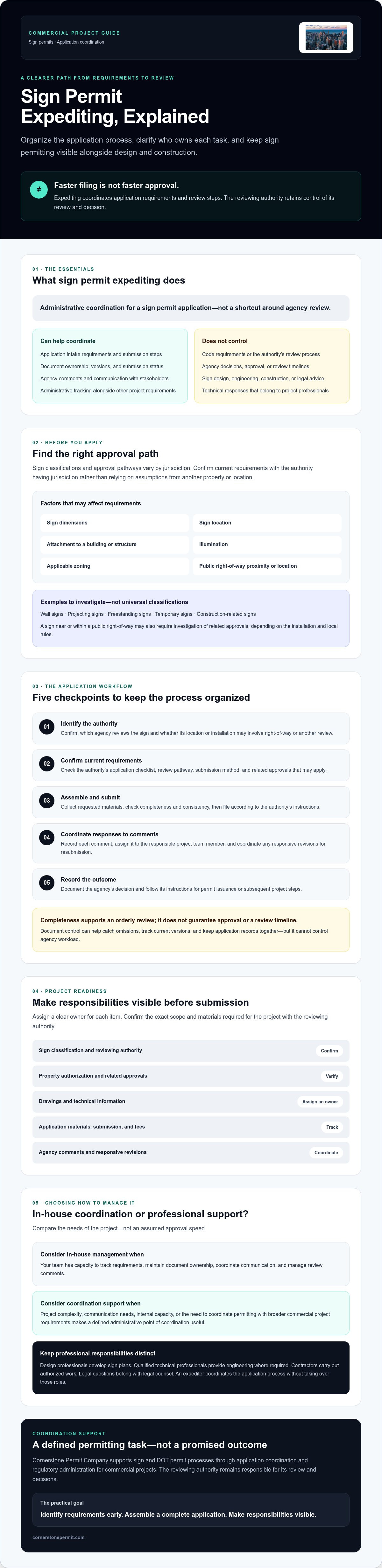
A faster filing isn’t the same as a faster approval. For commercial projects, sign permit expediting means coordinating the application process, not bypassing agency review. Sign classifications and approval pathways vary by jurisdiction, and an incomplete package may lead to comments or resubmittals that affect project sequencing.
If you’re balancing property requirements, sign design, agency submittals, and construction milestones, that uncertainty is familiar. The practical goal is to identify requirements early, assemble a complete application, and make responsibilities visible, not to assume approval or a fixed review time.
This guide explains what sign permit expediting can cover, which approvals and documents to investigate before applying, and how to compare in-house coordination with professional support. It also outlines how to organize permitting alongside design and construction, including how to check sign classifications, property-related requirements, drawings, and related approvals. Cornerstone Permit Company supports sign and DOT permit processes through application coordination and regulatory administration. Agencies retain authority over their review and decisions. With a clear process, teams can manage permitting as a defined project task rather than a last-minute disruption.
Key Takeaways
- Confirm the sign classification, reviewing authority, property authorization, and possible related approvals before preparing the application.
- Sign permit expediting coordinates application requirements and review steps; the authority remains responsible for its review and decision.
- Compare internal capacity, document ownership, communication needs, and project complexity to decide whether to manage the process in-house or seek support.
- Assign clear owners for drawings, technical information, application materials, fees, and responses to review comments to keep permitting organized.
- Understand how Cornerstone’s sign and DOT permit services can support application coordination alongside broader commercial project permitting.
What sign permit expediting covers, and where the expediter’s role begins
Sign permit expediting organizes and coordinates the application requirements and review steps for a proposed sign. It can help a commercial project team track what must be submitted, who owns each item, and how agency comments will be handled. The authority having jurisdiction reviews the application and determines the outcome.
In practical terms, sign permit expediting is administrative coordination of a sign permit application, not sign design, construction, or legal representation. Keeping these responsibilities distinct helps teams engage the right professionals and maintain a clear view of the permitting process.
Which signs may require permits or related approvals?
Requirements can depend on a sign’s dimensions, location, attachment to a building or structure, illumination, and applicable zoning. A wall sign, projecting sign, freestanding sign, temporary sign, or construction-related sign may follow a different path, but these examples aren’t universal classifications. A sign near or within a public right-of-way may also require investigation of related approvals, depending on the installation and local rules.
Before finalizing the application plan, confirm how the relevant authority classifies the sign and which reviews apply. The authority’s current requirements are the reference point. Assumptions based on another property or jurisdiction may not apply.
What does a sign permit expediter do, and not do?
An expediter can help coordinate administrative steps, such as organizing intake requirements, tracking documents and submission status, relaying agency comments, and keeping project stakeholders informed. Confirm the exact scope for the project because required materials and review procedures vary.
The expediter facilitates communication and process management. They can’t waive code requirements, control agency review decisions, or guarantee approval. If reviewers request revisions or additional information, the responsible project professionals must provide the necessary technical response.
That boundary matters. Permit coordination is separate from architectural design, engineering, construction, and legal advice. Design professionals develop sign plans; qualified technical professionals provide engineering where required; contractors carry out authorized work; and legal questions belong with legal counsel. An expediter can help keep the application process organized across these responsibilities without taking them over.
For commercial teams, the value is a defined administrative point of coordination, particularly when sign approvals need to be tracked alongside other project requirements. Cornerstone Permit Company manages sign and DOT permit processes for commercial projects, while the reviewing authority remains responsible for its decisions.
How the sign permit application and review process typically works
A well-managed application follows a defined sequence, although the responsible authority and required materials depend on the sign and project. Treat each step as a checkpoint, and verify current procedures with the authority having jurisdiction.
- Identify the authority. Confirm which agency reviews the sign and whether its location or installation may require a separate right-of-way or other review.
- Confirm requirements. Check the current application checklist, review pathway, submission method, and any related approvals that may apply.
- Assemble and submit. Collect the requested application materials, check for completeness and consistency, then file them according to the authority’s instructions.
- Respond to review comments. Record each comment, assign it to the responsible project team member, and coordinate responsive revisions for resubmission.
- Close out the process. Record the agency’s decision and follow its instructions for permit issuance or subsequent project steps.
A complete submission supports an orderly review, but it does not determine approval or guarantee a review timeline. Coordinated document control can help teams catch omissions, track current versions, and keep application records together. It can’t control agency workload or replace the authority’s review.
What information may be needed for a sign permit application?
Depending on the authority and sign, an application may call for sign plans, dimensions, materials, mounting details, a location plan, and property authorization. Some projects may also require technical drawings or supporting documents. Confirm whether qualified design or engineering professionals must prepare, review, or approve these materials. Permit coordination doesn’t replace that work.
Before assembling the package, check the current application checklist and submission standards, including required file types and upload instructions. Requirements can change, so don’t rely solely on a prior project’s submittal.
How are review comments, revisions, and related approvals handled?
Maintain a comment log that records the agency’s request, the assigned responder, the revision status, and the resubmission record. This makes responsibilities visible and helps keep each response or updated drawing with the correct application version.
Depending on the sign and its location, reviews may involve zoning, building, electrical, right-of-way, or other requirements. Confirm which apply with the relevant authority, then coordinate the sequence with the project team. For administrative support with sign and DOT permit processes, discuss sign permit coordination with Cornerstone.
In-house management or sign permit expediting: how to compare options
The right approach depends on the application’s complexity and the team’s capacity to manage details consistently. A straightforward project with clear requirements may be manageable in-house. Multiple stakeholders, related reviews, or limited staff capacity can make outside coordination worth considering. In either case, sign permit expediting organizes the process; it cannot bypass agency review or guarantee approval.
| Factor | In-house management may fit when… | Outside support may help when… |
|---|---|---|
| Team capacity | A staff member can own follow-up and deadlines. | Internal staff have competing project responsibilities. |
| Application familiarity | The team understands the authority’s current requirements. | The pathway or submission requirements need additional coordination. |
| Document ownership | Plans and supporting materials have clear owners and version control. | Documents come from multiple parties and require organized tracking. |
| Communication | One project contact can coordinate property representatives, design professionals, and agency responses. | Comments and updates need consistent routing across stakeholders. |
| Scope | The sign application is relatively contained, with few related reviews. | Several approvals or project interfaces may need to be monitored. |
When can a project team manage sign permits internally?
Internal management can work when requirements are clear, staff have time to maintain the application record, and one person can coordinate the relevant parties. Before choosing this route, confirm that someone can track agency instructions, obtain property authorization, collect current documents, and manage follow-up alongside other project duties.
Set up a simple control log at the outset. Record responsibilities, target dates, submitted materials, agency communications, and decisions. Clear ownership helps the team spot gaps and maintain a reliable project record.
What should you ask a sign permit expediting firm?
Ask the provider to define its deliverables and exclusions before work begins. Clarify which application coordination tasks it handles, which materials must come from the client or design professionals, and how it tracks submissions, agency comments, revisions, and status updates.
Listen for realistic language about agency dependencies. A provider should explain that the authority determines review periods and outcomes, and that additional requirements may arise during review. Be cautious of claims that imply approval is assured or that an expediter can bypass the established process. A clear scope and reporting approach make it easier to assess whether outside support addresses a genuine coordination need.
Prepare a sign permit project with a practical readiness checklist
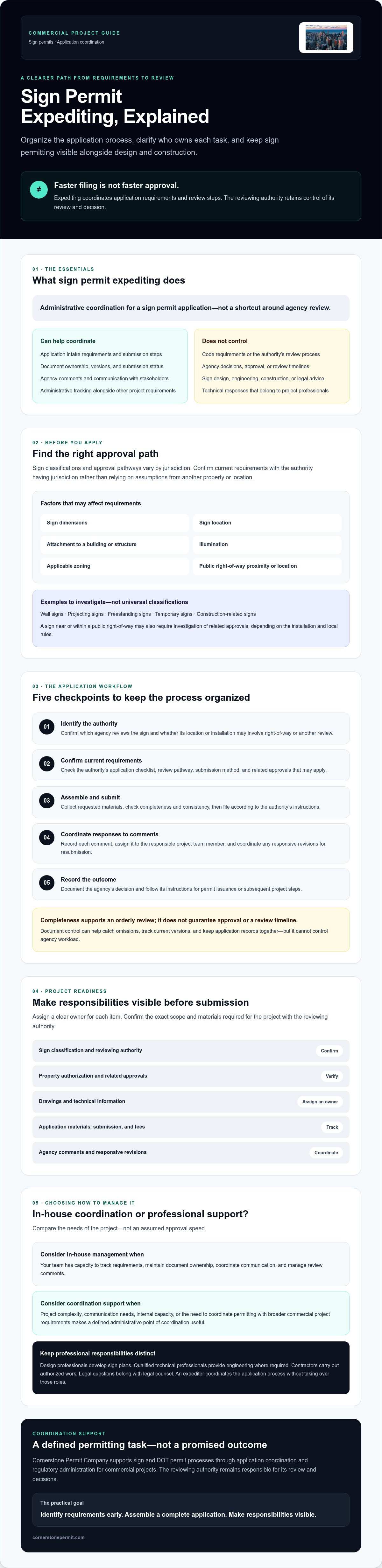
A readiness review turns a proposed sign into a coordinated permit workstream. Confirm the project details, identify who owns each deliverable, and connect permit milestones to procurement and installation planning. Agency requirements and review durations can vary, so keep schedule assumptions flexible and avoid committing to procurement or installation dates that depend on an unconfirmed approval.
Confirm project scope, site information, and approval pathway
Record the sign type, proposed placement, dimensions, attachment method, illumination, and installation scope. Then verify the reviewing authority and ask whether zoning, building, electrical, right-of-way, or other reviews apply. Confirm property-owner authorization and identify any site-specific documents the authority requests before assembling the submission package.
Use this initial checklist to establish a reliable project baseline:
- ☐ Confirm the proposed sign scope and site location.
- ☐ Identify the authority and verify its current application checklist and submission format.
- ☐ Ask which related reviews or approvals may apply to the sign and installation context.
- ☐ Confirm property authorization and who will provide it.
- ☐ Identify owners for drawings, technical specifications, application materials, and applicable fees.
Build a document and responsibility tracker
Keep a tracker for each required document, its preparer, review status, current version, and submission date. Assign responsibility to specific project roles rather than a general team inbox. Design and technical materials should remain with their qualified preparers, while the application coordinator tracks what is needed and whether it has been received.
For agency comments, record the request, response owner, due date if provided, and location of the revised drawing or document set. Preserve submission confirmations, agency correspondence, and final permit records with the project closeout documentation. This makes handoffs visible and reduces the risk of circulating outdated materials.
Align these records with procurement and installation planning. Mark which decisions or documents are prerequisites for the next project milestone, and review those dependencies as the application progresses. Sign permit expediting can support coordination, but it can’t determine agency review timing. Maintain schedule flexibility when procurement or installation depends on the authority’s decision.
For broader context on coordinating approvals with commercial project plan review, see the commercial building permit expediting guide. To discuss sign and DOT permit coordination for a commercial project, contact Cornerstone Permit Company.
How Cornerstone supports sign permit expediting from application to coordination
Sign permitting involves more than submitting a form. A commercial project may require coordination among the property representative, design professionals, project team, and relevant reviewing authorities. Cornerstone Permit Company provides sign and DOT permit services focused on administrative and regulatory coordination, helping teams organize application requirements and keep process information connected across stakeholders.
That support can include organizing application information, tracking process status, and coordinating communications about project requirements. The specific scope depends on the sign, the project, and the authority’s procedures, so confirm responsibilities before work begins. Permit coordination supports administration; it does not control agency review, guarantee approval, or replace technical work required from qualified professionals.
When specialized permit coordination may fit a commercial project
Outside coordination may be useful when a team is managing overlapping permit tasks, several stakeholders, or limited administrative capacity. For example, a project contact may need to keep property information, application records, agency correspondence, and related approvals organized while other team members focus on their project responsibilities.
Prepare useful background for an initial discussion: available sign plans, site information, known project deadlines, and any correspondence already received from an authority. This helps clarify what is known, what still needs confirmation, and which responsibilities may require coordination. The appropriate scope depends on project details and agency requirements.
What to clarify before engaging a permit expediting partner
Establish the working arrangement before the application process advances. Confirm which coordination tasks the provider will handle, what the client or design professionals must supply, who owns each document, and how updates will be communicated. A clear division of responsibility helps prevent missing information and uncertainty about who should act on an agency request.
Discuss how comments, revisions, and requirements outside the initially understood scope will be recorded and routed. Also clarify what status reporting will include and how agency-dependent review periods and decisions will be described. These conversations support realistic project planning without implying that an expediter can influence the authority’s determination.
Cornerstone does not provide architectural design, general contracting, or legal representation. Its role is permit-process coordination, while design, construction, and legal responsibilities remain with the appropriate professionals. To review your project’s requirements and discuss whether coordination is appropriate, discuss your sign permit project with Cornerstone.
Set Up Your Sign Permit Process with Clear Ownership
A commercial sign application is easier to manage when the team confirms the applicable approval pathway, verifies current requirements with the reviewing authority, and assigns responsibility for documents and agency responses. Strong coordination can help reduce avoidable gaps, but the authority controls its review and decision.
That’s the practical role of sign permit expediting: organizing application administration and keeping project stakeholders aligned, not bypassing review or guaranteeing approval. Whether your team manages the process internally or considers outside support, define the scope, responsibilities, and schedule dependencies before procurement or installation plans rely on a permit decision.
Cornerstone Permit Company provides sign permit and DOT permit expediting services for commercial projects. Founded in 2014, the company is a Certified Minority Business Enterprise (MBE). To discuss your project requirements and the coordination that may be appropriate, discuss your sign permit project with Cornerstone.
With clear records, defined responsibilities, and realistic planning, your team can move forward with a more organized permitting process.
Frequently Asked Questions
What is sign permit expediting?
Sign permit expediting is the administrative coordination of a sign permit application and its review steps. It may involve organizing application materials, tracking submission status, and coordinating communications among project stakeholders. The authority having jurisdiction reviews the application and determines the outcome. An expediter helps manage the process but doesn’t replace required design or technical professionals, provide legal representation, or control agency decisions.
Do all commercial signs require a permit?
No, permit requirements aren’t the same for every commercial sign. They can depend on the sign’s dimensions, placement, attachment, illumination, property, and applicable local rules. A wall sign and a freestanding sign, for example, may be treated differently by an authority. Before ordering or installing a sign, confirm its classification and any permit or related approval requirements with the authority having jurisdiction.
How long does sign permit expediting take?
There’s no single timeline for sign permit expediting. The overall process depends on the applicable authority, submission requirements, project details, review workload, and whether the application receives comments requiring a response. An expediter can coordinate records and follow-up, but can’t set the agency’s review duration. Confirm current expectations with the authority, and allow for review uncertainty when scheduling procurement and installation.
Can a sign permit expediter guarantee approval?
No. A sign permit expediter can help organize and coordinate an application, but the reviewing authority determines whether it meets applicable requirements and whether to approve it. No expediter can waive those requirements, bypass the review, or guarantee the outcome. Ask any prospective provider to explain its deliverables, client responsibilities, and approach to agency comments, and be cautious of claims that promise a particular decision.
What documents are needed for a sign permit application?
Required documents vary by authority and project. An application may request sign plans, dimensions, materials, mounting details, a location plan, and property authorization. Some signs or installation contexts may require additional technical documents or related approvals. Check the authority’s current application checklist and submission standards before assembling materials. Ask whether qualified design or engineering professionals must prepare or approve drawings and technical documents.
Is sign permit expediting the same as sign design?
No. Sign permit expediting concerns coordinating application requirements, submissions, status, and review communications. Sign design is a separate professional responsibility, as are engineering and construction. An expediter doesn’t create sign plans or provide architectural design services. The project team should identify qualified professionals to prepare required design or technical materials, then coordinate those materials with the application process and the authority’s stated requirements.
When should a business hire a sign permit expediter?
Consider outside coordination if the team has limited administrative capacity, multiple stakeholders, overlapping permit tasks, or uncertainty about managing submissions and agency comments. In-house management may suit a straightforward application when requirements are clear and staff can own documentation and follow-up. Before engaging a provider, clarify its scope, reporting practices, document responsibilities, and approach to comments. Support organizes the process, but doesn’t guarantee approval or timing.
Can one sign project need more than one approval?
Yes, a sign project may involve more than one review or approval, depending on its location, installation, and applicable requirements. For example, zoning, building, electrical, or right-of-way reviews may be relevant in some contexts. Don’t assume every listed review applies or that one permit covers them all. Ask the authority having jurisdiction which approvals are required and how those reviews relate to the proposed work.