What if the main source of delay isn’t the agency’s review, but an application sent to the wrong authority or missing information? A DOT permit expediter can help organize the process, but a right-of-way permit may fall under a state, county, or local transportation agency, depending on the project. Confirming the jurisdiction and submission requirements at the outset helps prevent avoidable review cycles.
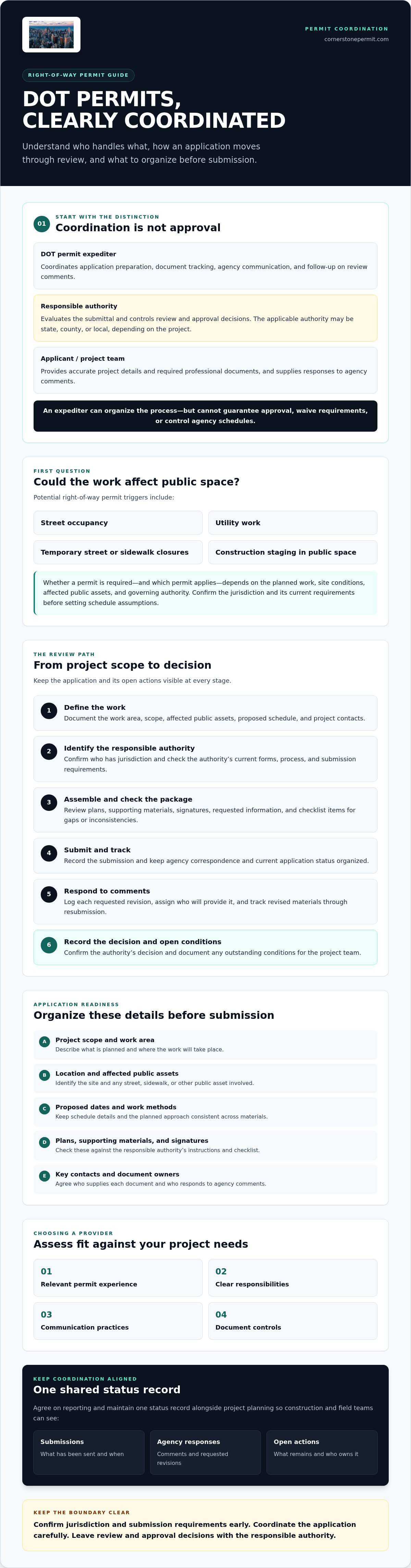
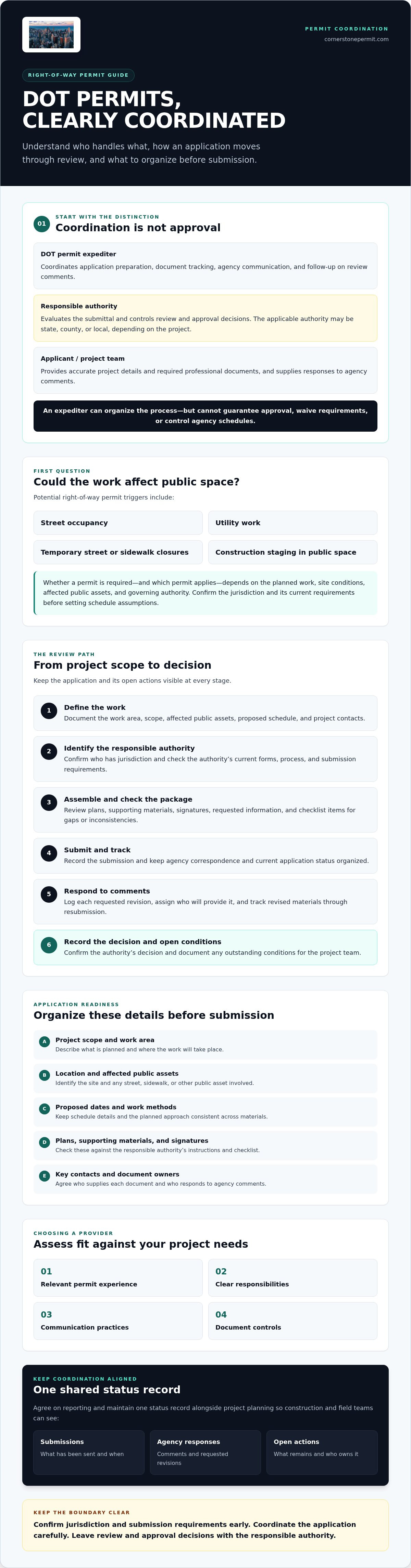
Permit coordination can compete with construction planning and fieldwork. A skilled expediter can research applicable requirements, help prepare a complete submittal, and coordinate communication with the reviewing agency. The expediter can’t control the agency’s decisions or guarantee approval. This guide explains what a DOT permit expediter handles, where the role has limits, and how to assess a provider against your project needs. It also covers what to assemble for a right-of-way application and how to keep permit administration aligned with construction planning.
Key Takeaways
- A DOT permit expediter can coordinate application preparation and follow-up, while the responsible authority controls review and approval.
- Assess providers by relevant permit experience, clear responsibilities, communication practices, and document controls.
- Before preparing a right-of-way application, organize the project scope, location details, proposed dates, work methods, and key contacts.
- Confirm the applicable authority’s requirements because forms and submission procedures vary by jurisdiction.
- Agree on reporting and maintain one status record to track submissions, agency responses, and open actions alongside project planning.
What a DOT Permit Expediter Does for Right-of-Way Projects
A DOT permit expediter coordinates application preparation and administrative follow-through for projects that may affect a public right-of-way. A right-of-way can refer to the physical area used for public travel and the legal right to pass through it. For project teams, the practical question is whether planned work affects a street, sidewalk, or other public asset in a way that requires agency review.
The expediter helps organize the process. The authority having jurisdiction evaluates the application and makes review and approval decisions. A DOT permit expediter can track a submittal and coordinate responses, but can’t replace the authority’s judgment or take responsibility for the applicant’s project information.
What work may trigger a right-of-way permit?
Potential triggers include street occupancy, utility work, temporary street or sidewalk closures, and construction staging that uses public space. Whether a permit is required, and which permit applies, depends on the planned work, site conditions, affected public assets, and governing authority. Permit names, jurisdiction, forms, and review steps can differ by location. Confirm project-specific requirements with the agency responsible for the site before setting schedule assumptions.
What an expediter handles, and what remains with the applicant
An expediter can coordinate documents, track application status, communicate with the reviewing agency, and follow up on review comments. This administrative coordination gives the project team a clearer record of what has been submitted and what remains open. It doesn’t mean the expediter designs the work or makes technical decisions for the applicant.
The applicant remains responsible for accurate project details and any required professional documents. Depending on the authority’s instructions, these may include information about the work area, scope, methods, and schedule. The expediter can help identify administrative gaps, but can’t guarantee approval, waive requirements, or control agency schedules. Before submission, agree on who will supply each document and respond to comments.
For contractors, developers, and builders managing permit administration alongside construction planning, a clear division of responsibilities helps keep the process organized. Cornerstone Permit Company provides DOT permit support as part of its permit services, while the relevant transportation authority retains control of its review and decisions.
How a DOT Permit Expediter Moves an Application Through Review
A right-of-way application moves through several stages: define the work, identify the responsible authority, assemble the required materials, submit and track the package, respond to comments, then record the decision and any outstanding conditions. The scope matters because a right-of-way can involve a right to pass over or through real property, while each authority sets its own process for reviewing work that affects public space.
A DOT permit expediter coordinates the application and review record. The authority evaluates the submittal and decides whether to issue the permit. Keeping these responsibilities distinct helps project teams plan without treating coordination as a substitute for agency approval.
From project scope to application submittal
Start by documenting the work area, proposed schedule, affected public assets, and the project contacts responsible for decisions and documents. The DOT permit expediter can help confirm which authority has jurisdiction and check its current application process before materials are assembled. This step is especially useful when street closures, construction staging, signage, or utility work may involve more than one public asset or reviewing office.
Once the process is confirmed, check plans, supporting materials, signatures, and requested information against the authority’s checklist. A completeness review can flag missing fields, inconsistent dates, absent attachments, or unanswered checklist items before submission. It can help catch preventable administrative gaps, but it doesn’t determine how the agency will assess the project or guarantee a shorter review.
Review comments, status tracking, and permit issuance
After submission, keep a clear record of the submission date, agency correspondence, requested revisions, and the person assigned to each response. If the authority comments on a plan or asks for additional information, log each item, identify who will provide the response, and track the revised material through resubmission. This keeps open actions visible to construction and field teams instead of buried in separate email threads.
Before closeout, confirm the authority’s decision, any stated permit conditions, and the next required steps with the agency. Share the current status and relevant documents with project contacts who need them for coordination. Issuance, conditions, and timing remain subject to the reviewing authority, and a complete package does not guarantee approval.
For teams seeking help organizing DOT permit applications and follow-up, Cornerstone’s DOT permit support may be relevant to the administrative coordination involved.
How to Compare DOT Permit Expediters for Your Project
Compare providers by the work they will actually perform, not by broad claims about agency access or approval. A capable DOT permit expediter should be able to explain relevant right-of-way experience, define who prepares and supplies each document, and describe how submissions, comments, revisions, and open actions are tracked. The reviewing authority makes the decision, regardless of who coordinates the application.
Which capabilities matter for a DOT permit expediter?
Ask for examples of experience coordinating permits that involve public rights-of-way and multiple project stakeholders. Confirm how often you’ll receive status updates, who follows up with the agency, and how review comments are assigned and recorded. Establish who prepares technical plans and who provides project-specific engineering information. Administrative coordination is not the same as technical design or professional documentation.
The right management model depends on internal capacity, project complexity, and the amount of coordination required. Use this comparison as a starting point, then verify the specific scope with each provider:
| Approach | May suit | Confirm before proceeding |
|---|---|---|
| In-house management | A team familiar with the applicable process that has time to manage a straightforward application. | Who owns submissions, agency follow-up, comment responses, and status reporting? |
| Specialist expediting | A project team seeking focused coordination of a DOT or right-of-way application. | Which documents and communications are included, and what remains with your staff? |
| Broader permit consulting | A project with several permit-related workstreams that may require wider administrative coordination. | Which approvals are within scope, and which authorities or tasks are excluded? |
When should a team manage permits in-house?
In-house management can be practical when staff know the relevant process, the application is manageable, and someone has time to track requirements and follow up. Outside support may help when agency coordination pulls staff away from core project work or multiple contacts and documents need consistent oversight. Choose based on capacity and defined responsibilities, not on the assumption that one approach guarantees a particular outcome.
Before engaging a provider, ask direct questions:
- What tasks are included, and what is excluded?
- How will you receive updates, and how often?
- Who handles agency follow-up and organizes responses to review comments?
- How are document versions, submission records, and open items controlled?
- Who supplies technical plans and project-specific engineering information?
Treat a promise of guaranteed approval as a warning sign. Providers can coordinate the application and maintain a clear record, but only the reviewing agency can determine whether to issue a permit and what conditions apply.
How to Prepare a DOT Permit Application Before Engaging an Expediter
A prepared project file gives a DOT permit expediter a clearer starting point and helps the team identify missing information before submission. Requirements differ by authority, so use this checklist to organize what you have, then confirm current instructions with the agency responsible for the work area. Don’t rely on a prior application instead of checking the forms and process for this project.
Project details and supporting materials to organize
Gather the core project facts first. Record the scope, precise work-area location, affected public assets, proposed dates, work methods, and contacts responsible for decisions and documents. Make sure the description reflects what the project team actually plans to do, including any street occupancy, temporary closure, or staging that may affect public space.
Then collect the materials the authority may request. Depending on the project and its requirements, these could include plans, traffic-control materials, insurance records, signatures, or other supporting documents. Confirm which items apply rather than assuming every permit package needs the same materials. Mark unresolved technical details and route them to the project’s qualified design or engineering team for confirmation. Don’t fill gaps with unverified estimates.
A pre-submittal check that reduces avoidable gaps
Before filing, compare each application response and attachment with the authority’s current instructions. Check for consistency across the scope narrative, drawings, dates, contact details, and supporting records. For example, if the application describes a temporary closure but the plan shows a different work area, flag the discrepancy for resolution before submission. This review can help catch administrative omissions, but it can’t determine the agency’s decision or guarantee a particular review outcome.
- Confirm the correct authority, current form, and submission channel.
- Verify which plans, insurance documents, and other attachments are required.
- Check that project descriptions, locations, dates, and contacts match across materials.
- Identify incomplete technical information and assign it to the responsible project professional.
- Keep a copy of the submitted package and note any outstanding items.
For additional background, consult the related DOT permit services guide if it’s available through your project resources. If your team needs help organizing DOT permit coordination, learn about Cornerstone Permit Company’s DOT permit support.
Engage a DOT Permit Expediter and Keep Project Coordination Moving
Once you’ve identified the permit requirements and gathered available project information, set up a clear handoff. A DOT permit expediter can coordinate application administration, but effective support depends on an agreed scope, timely access to project documents, and clear ownership of decisions and technical information.
What to include in an initial project discussion
Give the provider a concise project summary, including the work area, target schedule, known authority contacts, and current application status. Identify unresolved items, such as missing documents, pending project decisions, agency review comments, or dependencies that could affect submission. This context helps establish which coordination tasks are ready to proceed and which need input from the project team.
Before work begins, ask the provider to document the arrangement. Confirm:
- Which application and coordination tasks are included, and which are excluded.
- Who supplies project details, technical materials, signatures, and other required documents.
- Who communicates with the authority and follows up on open review items.
- How often status updates will be shared and how urgent changes will be reported.
A single status record can keep the team aligned. Track the authority, submission date, current application version, agency responses, assigned actions, responsible contacts, and next steps in one shared location. Update it as documents are revised or comments are resolved so construction planning and permit coordination rely on the same information.
How Cornerstone supports permit coordination
Cornerstone Permit Company manages DOT and sign permit processes as part of its permit expediting and regulatory consulting services. The company helps contractors, developers, and builders organize application coordination and follow-through. Agency review, permit conditions, decisions, and schedules remain with the responsible authority.
If signage is part of the project, the sign permit expediting guide can also help organize the related permit work. Keep responsibilities for each application clear, especially when separate submissions or agency contacts are involved.
To discuss your project’s requirements, contact Cornerstone Permit Company and determine whether its DOT permit coordination support fits your needs. Share the work scope, available documents, known authority contacts, and current status to make the initial discussion practical and focused.
Put Your Right-of-Way Permit Process on a Clear Track
A well-managed application starts with confirming the authority’s requirements, assembling accurate project information, and assigning clear ownership for documents and follow-up. A DOT permit expediter can help coordinate these steps and maintain a useful status record, but the reviewing agency retains control of its decision and schedule.
Choose support based on your team’s capacity, the project’s coordination demands, and the provider’s defined responsibilities. Before engaging an expediter, clarify what’s included, how updates will be handled, and who will respond to technical questions or agency comments.
Cornerstone Permit Company provides DOT and sign permit support nationally for contractors, developers, and builders. Founded in 2014, the company is a certified Minority Business Enterprise.
Discuss your DOT permit coordination needs with Cornerstone to determine whether its support fits your project requirements. With clear roles and organized follow-through, your team can approach the review process with greater confidence.
Frequently Asked Questions
What does a DOT permit expediter do?
A DOT permit expediter coordinates administrative steps involved in preparing and tracking a transportation-related permit application. This may include identifying the appropriate authority, organizing application materials, monitoring submission status, communicating with agency staff, and following up on review comments. The applicant remains responsible for accurate project information and required technical documents. The expediter does not make the agency’s decision, waive its requirements, or guarantee that a permit will be issued.
When should I hire a DOT permit expediter?
Consider hiring a DOT permit expediter when work may affect a public street, sidewalk, or other right-of-way and your team needs help coordinating application administration. Specialist support may be useful if several project contacts must supply information, agency comments need organized follow-up, or permitting tasks are competing with construction planning. For a straightforward application, an experienced internal team with enough time and familiarity with the authority’s process may be able to manage it directly.
Can a DOT permit expediter guarantee permit approval?
No. A permit expediter can help organize a complete application and maintain follow-through, but the authority having jurisdiction reviews the materials and decides whether to approve, deny, or condition a permit. Ask providers to define their responsibilities and explain how they manage review comments, but treat promises of guaranteed approval as a warning sign. A well-coordinated submission can help address administrative gaps; it cannot control an agency’s decision or schedule.
How long does a DOT permit take to get approved?
There isn’t one standard approval timeframe for every DOT permit. Review duration can depend on the responsible authority, the project, the completeness of the submission, and whether revisions or additional information are requested. Confirm current processing guidance with the agency that will review your application, and ask how it communicates status or outstanding conditions. Build the project schedule around the authority’s guidance rather than assuming an expediter can guarantee a review date.
What documents are needed for a DOT permit application?
Required materials depend on the authority and the proposed work. An application may request a scope description, work-area location, proposed dates, plans, traffic-control materials, insurance records, signatures, and project contact information. Treat these as possible items, not a universal checklist. Confirm the current form and instructions directly with the reviewing authority, then check that dates, locations, and project descriptions match across every document. Have qualified project professionals confirm unresolved technical information.
Do DOT permit requirements vary by state or local authority?
Yes. The correct jurisdiction, permit name, application form, submission channel, supporting documents, and review steps can vary by project location and by the authority responsible for the affected right-of-way. A state transportation agency may oversee one location, while a local authority may handle another. Confirm jurisdiction and current requirements with the agency before preparing a package. Don’t assume a process used for a previous project applies to a new site.
Can a contractor submit a DOT permit application without an expediter?
Often, a contractor can manage and submit an application directly, but the responsible authority sets applicant and submission requirements. Check who may apply, who must sign, and whether the owner or another project participant needs to provide information. Direct filing may suit a team with sufficient time and process familiarity. An expediter is an optional source of administrative coordination when tracking documents, agency communication, and open review actions would otherwise strain project resources.