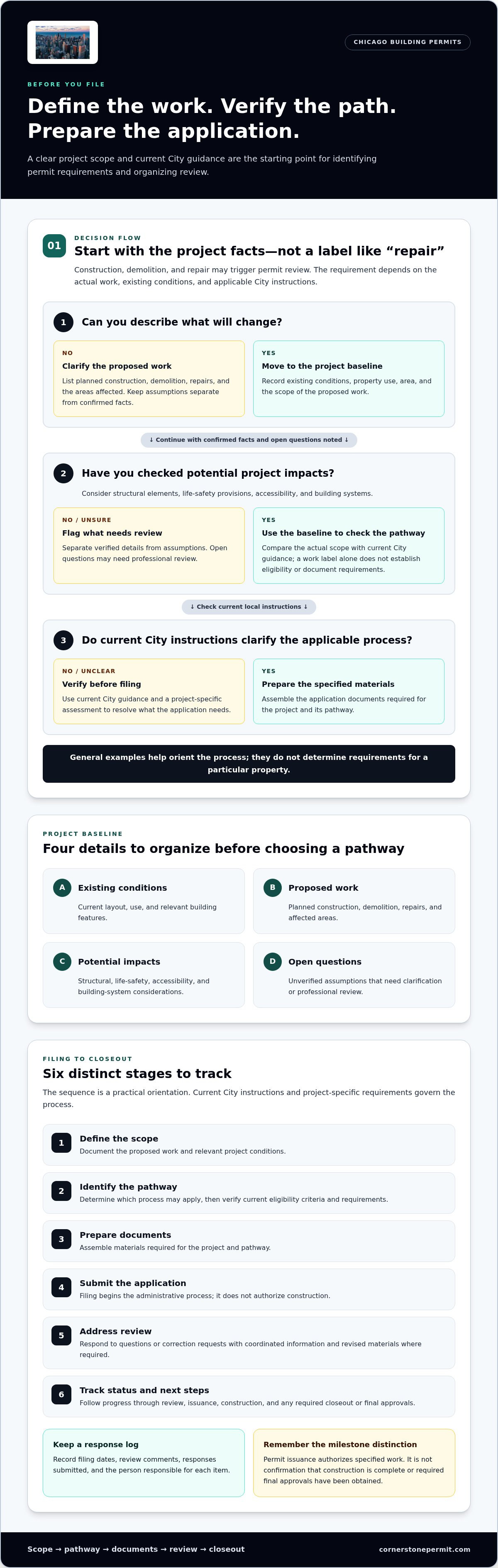
The permit process starts before filing. A defined scope, a suitable review pathway, and complete project information give an application a stronger foundation. For teams researching things to know when getting a permit, the first questions are whether the planned work requires a permit and which municipal process applies.
Permit requirements depend on the work, and missing or unclear project details can lead to review comments and follow-up. General guidance can help you prepare, but current local instructions and a project-specific assessment determine what an application needs.
This article explains how to identify the right initial questions, prepare a more complete application package, and manage the process after filing. It also outlines how permit review proceeds and how coordinated application management can help teams organize submissions, track responsibilities, and respond to review requirements. With those steps in view, filing becomes part of project readiness, not a guess at what the municipality will need.
Key Takeaways
- Distinguish construction permit guidance from other permit types and identify when planned work may require municipal authorization.
- Use these Things to know when getting a permit in Chicago to compare permit pathways by project scope without assuming eligibility.
- Build a practical application checklist by documenting the project scope, occupancy, area, existing conditions, and proposed work.
- Prepare for review comments by recording submission dates, assigning follow-up responsibilities, and coordinating revised materials.
- Understand why permit issuance is a milestone, not the end of the process, and what to track through required final approvals.
What a Chicago Building Permit Covers, and When Work May Require One
This guide covers construction permits, not driver’s or learner’s permits. A building permit is municipal authorization for specified work under applicable construction and safety requirements. It is not a design service, permission to begin construction before the permit is issued, or confirmation that a project has passed final inspections. Each stage has a distinct role: design documents describe proposed work, construction carries it out, and required final approvals address project closeout.
Whether a permit is required depends on the proposed work, the building’s existing conditions, and the rules that apply. A label such as “repair” or “renovation” is not enough to determine the requirements. Start by defining the work, then verify the current City guidance that applies before construction begins.
What types of work may trigger a permit review?
Construction, demolition, and repair are broad examples of work that may require permit review. The specific requirement depends on the nature and extent of the work and the applicable City instructions. Calling a job a repair, for example, does not establish whether it qualifies for a particular permit pathway or what documents are required. Compare the actual scope with current building department guidance before scheduling work.
Which project details should you define first?
Before choosing a permit pathway, establish a clear baseline. Record what exists today, what will change, how the property is used, and the area and scope involved. Note whether the work could affect structural elements, life-safety provisions, accessibility, or building systems. These details help distinguish a limited alteration from work that may need broader review.
- Existing conditions: Describe the current layout, use, and relevant building features.
- Proposed work: List the planned construction, demolition, repairs, and affected areas.
- Potential impacts: Flag structural, life-safety, accessibility, and building-system considerations.
- Open questions: Separate verified project facts from assumptions that need professional review.
This distinction matters. An assumption about occupancy or existing conditions can affect how the work is characterized, while a confirmed scope gives the application process a more reliable starting point. Among the key Things to know when getting a permit in Chicago, project-specific requirements must be checked against current City guidance. General examples cannot determine the outcome for a particular property.
How the Chicago Building Permit Process Moves from Filing to Review
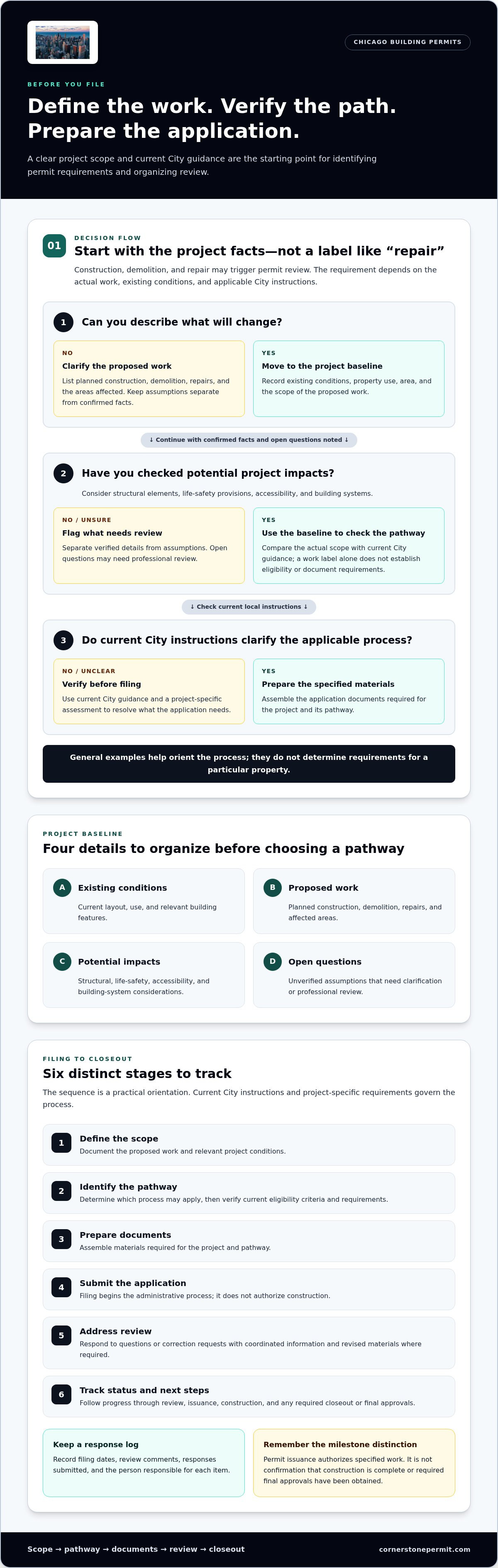
A permit application moves through distinct stages. Keeping those stages separate helps teams manage responsibilities and project records. The sequence below is a practical orientation, not a promise about review duration, approval, or the steps required for every project. Current City instructions and project-specific requirements govern the process.
- Define the scope. Document the work and relevant project conditions so the application reflects what is actually proposed.
- Identify the pathway. Determine which permit process may apply based on the scope, then verify its current eligibility criteria and requirements.
- Prepare documents. Assemble the application materials required for the project and pathway.
- Submit the application. Filing begins the administrative process; it does not itself authorize construction.
- Address review. Respond to questions or correction requests with coordinated information and revised materials where required.
- Track status and next steps. Record progress through review, issuance, construction, and any required closeout or final approvals.
Submission, plan review, permit issuance, construction, and closeout are separate milestones. Review may involve technical and administrative checks, and the sequence can vary with project requirements. Permit issuance authorizes the specified work; it does not mean construction is complete or that required final approvals have been obtained.
What happens during application and plan review?
After submission, the application enters administrative and technical review appropriate to the project. Reviewers may raise questions or request corrections, which can require revised materials or input from different project participants. Not every application follows the same sequence, so organize each response around the actual comments received. For additional context on coordinating review, see this commercial building permit expediting guide.
How should applicants track review and respond?
Use the City’s online resource to check building permit application status, alongside an internal record of filing dates, review comments, submitted responses, and the person responsible for each item. A response log helps prevent missed handoffs and shows what remains outstanding. Address each stated review issue with a coordinated response, while recognizing that a complete response does not guarantee faster approval.
For project teams managing submissions and review coordination, building permit application management helps keep responsibilities and response materials organized throughout the process.
Which Chicago Permit Path Fits Your Project Scope?
Choose a permit route based on the project’s actual scope, not a preference for a particular application or document set. Programs have different descriptions and criteria, and a project’s apparent fit does not establish eligibility. Use the comparison below to identify what to investigate, then follow current official instructions for the program name, requirements, and submission process.
| Permit pathway | General program description | What to verify |
|---|---|---|
| Standard permit information | General building permit application and review information for projects that don’t proceed through a specialized program. | Which application instructions, review requirements, and supporting documents apply to the proposed work. |
| Express Permit Program | The City describes Express as a web-enabled platform. | Whether the current eligibility criteria include the project’s specific scope and what materials the pathway requires. |
| Developer Services Permit Program | The City describes Developer Services as addressing specialized needs for moderate-to-complex projects. | Whether the project’s complexity and review needs align with the program’s current criteria and process. |
This comparison is a starting point, not a determination. Conditions within a project can change the applicable requirements, so a pathway’s broad description does not settle the question. Things to know when getting a permit in Chicago include checking current program criteria against the documented scope, building conditions, and proposed work before preparing a submission package.
When should applicants investigate an Express Permit pathway?
Consider the Express Permit Program as one option to assess, not as a default route or a promise of a particular approval time. The City characterizes it as a web-enabled platform. Compare current eligibility criteria with the actual project scope and confirm the applicable submission instructions. A project’s size or label alone should not substitute for that review.
When may a complex project need coordinated review?
For moderate-to-complex project needs, the City describes Developer Services as a program to investigate. Define the full scope, identify review dependencies, and plan how information from different project participants will be coordinated. Code requirements can also affect planning; see this overview of the Chicago building permit regulations update for code-change context, then verify current City requirements for the project.
Choosing a pathway and preparing application materials are connected, but they are different decisions. Confirm the route first, then organize documents to match its current instructions. A package prepared for one program may not satisfy another, and a general comparison cannot replace a project-specific review of current City criteria.
Prepare a Chicago Permit Application Before You File
A complete application starts with a consistent account of the project. Before assembling forms and supporting materials, organize the facts that define the work and compare them with current City instructions. The building permit application service guide provides additional context on application management.
- Scope: Summarize the work, including what will be added, altered, repaired, or removed.
- Occupancy and use: Record how the space is currently used and any proposed change in use.
- Project area: Identify the affected area and use consistent measurements across application materials.
- Existing conditions: Document relevant current layouts, building features, and systems.
- Proposed work: Confirm that the written description corresponds to the plans and other project documents.
Required plans and supporting documents depend on the project type and current City instructions. Don’t assume a package from another project will fit. Keep one controlled set of current documents, with clear version information, so everyone preparing, submitting, or reviewing materials works from the same scope.
What project information should be consistent across documents?
Compare the application’s project description with the drawings, occupancy details, project area, and stated scope. Resolve discrepancies before filing, such as a written description that identifies different work from the drawings. Identify open design or code questions for appropriate professional review, and use current City instructions to determine the required forms and supporting materials.
How can teams reduce avoidable application gaps?
Assign an owner to each task: document preparation, submission, review-comment responses, and status tracking. Maintain version control by clearly marking current materials and archiving superseded files. This creates a reliable record and reduces the risk of someone relying on an outdated drawing. If an application is rejected, use the permit rejection action checklist to structure next steps.
These are practical Things to know when getting a permit in Chicago: consistent documents and clear responsibility support an orderly submission, but they don’t replace project-specific review or current agency requirements. For coordinated application management, get support preparing and managing your building permit application.
Manage Permit Review Through Approval and Project Closeout
Filing starts a review process, not a hands-off waiting period. Project teams need a dependable record of application status, agency comments, response materials, and outstanding responsibilities. Organized tracking keeps participants aligned as the application moves toward a decision, then helps carry the project record through construction and any required closeout.
What should a project team monitor after filing?
Maintain a review log that connects each agency comment to an assigned owner, response, supporting document, and submission date. Track the application status and identify the current response version, especially when revisions involve multiple team members. Follow current agency instructions for inspections, revised materials, and closeout requirements. Tracking supports accountability, but it does not control agency decisions or establish a review timeline.
- Application status: Record status updates and the date each is checked.
- Review comments: Log each item, its response owner, and related documents.
- Revisions: Identify current and superseded versions so teams work from the same materials.
- Milestones: Record submission dates, permit issuance, construction progress, and required final steps.
Permit issuance is not the same as completing construction or obtaining required final approvals. Treat each as a separate project milestone. After issuance, follow applicable permit conditions and current City instructions. Before closeout, confirm which inspections or approvals apply to the specific project.
When can permit coordination support project continuity?
Coordination is especially useful when a project has several reviewers, multiple document versions, or interdependent milestones. A permit coordinator can organize submissions, route review comments to the responsible team members, and maintain a record of responses and dates. Clear ownership and complete records support orderly administration, while the City retains authority over review and permit decisions.
Cornerstone Permit Company manages building permit applications and plan review coordination, with support extending through certificates of occupancy. This helps project teams maintain continuity between application review and later approval milestones. Among the practical Things to know when getting a permit in Chicago, permit tracking is an ongoing responsibility, not a substitute for current agency requirements or project-specific review.
For coordinated support with submissions, plan review, and permit records, discuss permit management with Cornerstone.
Set Up Your Permit Process for the Next Step
Strong permit administration begins with a clear scope, a pathway matched to the project, and application materials that tell a consistent story. These are central Things to know when getting a permit in Chicago, especially because current City requirements and project conditions determine what a filing must address.
After submission, keep review comments, response versions, responsible team members, and key dates in one organized record. Permit issuance is an important milestone, but it remains distinct from construction completion and any required final approvals. Tracking those steps helps teams maintain continuity from filing through closeout.
Cornerstone Permit Company manages permit applications and plan review through certificates of occupancy, helping project teams coordinate requirements and maintain clear responsibility records.
Discuss permit management with Cornerstone and take a structured approach to your next application. With clear preparation and coordination, your team can manage responsibilities at each stage.
Frequently Asked Questions
Does construction work in Chicago always require a building permit?
No. Whether work requires a building permit depends on the project scope, existing building conditions, and applicable requirements. Construction, demolition, and repair are examples of work that may trigger review, but the label alone does not determine whether a permit is required. Before starting, compare the proposed work with current building department guidance and project-specific requirements. Treat general information as an initial reference, not a definitive determination for a particular property.
What information should I gather before applying for a Chicago building permit?
Document the existing conditions, proposed work, property use or occupancy, affected project area, and overall scope. Note whether the work may affect structural elements, life-safety features, accessibility, or building systems. Compare these details across the application and drawings, and separate confirmed facts from questions requiring professional review. These are core Things to know when getting a permit in Chicago, since required forms and supporting documents depend on the project and current City instructions.
How long does it take to get a building permit in Chicago?
Review time varies by permit pathway, project type, and whether the City requests corrections. City process information describes Express permits as potentially taking from the same day to several business days, while standard plan review can take weeks or longer, with complex projects requiring additional review and revisions. These are not guaranteed turnaround times. Confirm current estimates for the relevant pathway and allow for review comments, responses, and project-specific requirements.
What happens if Chicago reviewers request corrections to my permit application?
Reviewers may identify questions or corrections that require clarification, revised plans, or other supporting materials. Log each comment, assign a responsible team member, and coordinate the response with relevant project participants. Submit materials that address the comments and keep a record of response dates and document versions. A complete response helps maintain a clear review record, but it does not guarantee approval or a specific review timeline.
Can I check the status of a Chicago building permit application online?
Yes. The City provides an online resource for checking building permit application status. Use it to monitor updates, and maintain a separate project log recording when you checked, what status appeared, and any follow-up required. Keep that record alongside agency comments, response versions, and assigned responsibilities. Online status tracking helps the team stay informed, but it does not replace official instructions or determine when a review decision will be issued.
How much does a Chicago building permit cost?
There is no single fee that applies to every building permit. The amount depends on factors such as project type, scope, valuation, and applicable permit pathway, and the City’s fee schedule may change. Review current official fee information for the specific application before filing, and distinguish City permit charges from separate professional or project costs. A general estimate cannot establish the fee for an individual project.
What is the difference between the Express Permit Program and Developer Services?
The City describes the Express Permit Program as a web-enabled platform and Developer Services as serving specialized needs for moderate-to-complex projects. Those descriptions offer a starting point, not confirmation that a particular project qualifies. Compare current official criteria with the actual scope, building conditions, and review dependencies, then follow the relevant application instructions. Don’t assume the Express route guarantees faster approval or that one document package will suit both programs.